

Cutting steak against the grain is one of the easiest ways to improve its texture and ensure that you get a steak that's melt-in-your-mouth tender, not tough, when grilling or slicing. Flank steak is tasty, affordable, and really versatile, but it is also one of the easiest cuts of beef to mess up if you slice it incorrectly.
Here's why this cut must be treated with special care:
- Its muscle fibers are long and clearly visible.
- It’s naturally harder than strip steak or ribeye
- There is very little fat present throughout.
That said, when handled correctly, flank steak can truly shine. Cut it the right way, and you end up with tender, juicy pieces that can compete with far more expensive cuts. Cut it the wrong way, however, and you’re left with tough, chewy meat; no amount of ideal seasoning will make it tender.

What Does “Against the Grain” Mean?
When you examine a piece of flank steak, it has visible long lines running across the surface. These are muscle fibers, and they are generally formed in the same direction. This direction is called “the grain.”
When you slice with those fibers, a long muscle strand remains in each bite, which will make the meat tough and chewy.
Why You Need to Cut Across the Grain of a Steak to Make It Tender
When slicing against the grain, you slice perpendicular to those muscle fibers. This will significantly shorten the length of fibers and make every bite easier to chew.
This method can be especially recommended for:
- Skirt steak
- Flank steak
- Flat iron steak
- Hanger steak
- Many wild game cuts
Which is why learning how to cut against the grain of flank steak is even more important than the cooking method or marinade you choose.
How to Identify the Pattern of Muscle Fibers or Grain in a Flank Steak
1. What the Grain Looks Like
The grain is referred to as long parallel lines that are clearly visible on a steak. On flank steak, you typically see them really well and most prominently prior to cooking.
You can spot the grain:
- On uncooked meat (most noticeable)
- On cooked meat (still visible, but less obvious)
2. What If the Grain Suddenly Moves Into a Different Direction?
Flank steaks can taper in or curve a bit. When this does happen, the grain can run in a completely different direction along the steak.
Rather than cutting directly across the steak, adjust your knife’s angle as you cut. The trick is always the same: Always cut perpendicular to the fibers in each piece.
3. Pro Tip: Look for the Grain Before You Cook
If you’re uncertain, figure out where the grain is before you cook the steak. It’s much easier to see at this point, especially when you’re learning the process of how to cut raw flank steak against the grain.
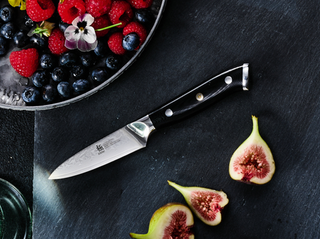
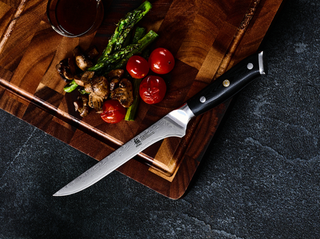
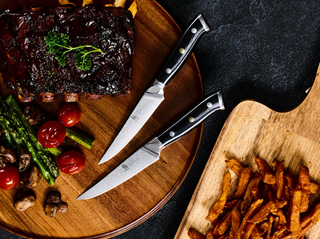
You can also make a small notch at the edge of each steak to indicate the direction before cooking. If needed, you can lightly remove the connective tissue or excess fat using a precise boning knife, such as the KYOKU Shogun series boning knife, before marking the grain.

Step-by-Step Procedure: Cutting Flank Steak Against the Grain
1. Make It Rest for Juicy Results
Allow your flank steak to rest for 5–10 minutes after cooking. This way, when you cut the meat, its juices have a chance to be redistributed through the fibers rather than spill out all over.
Skipping this step can make even a perfectly cut steak appear dry.
2. Correctly Lay Down The Steak
Lay the steak on a cutting board so the grain runs from left to right in front of you. Thanks to this position, you can better view the fibers and cut across them correctly.
3. Slice Perpendicular to the Grain
Now, for the most crucial part of how to cut a flank steak against the grain!
Your blade should be perpendicular to the muscle fibers. If you slice the steak the same way as the muscle lines, it will make it harder to chew.
4. Opt For The Right Blade
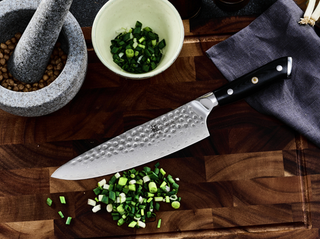
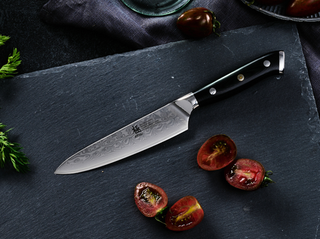
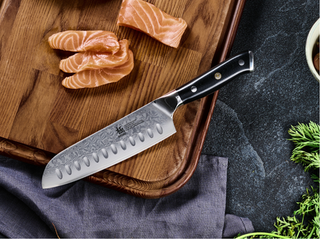
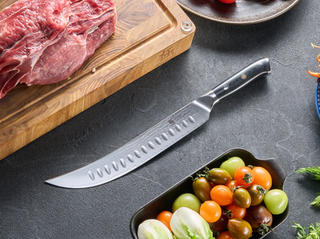
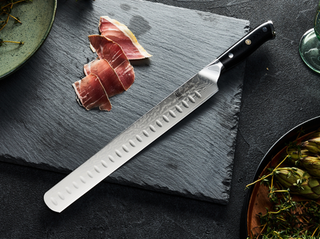
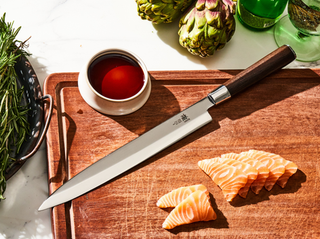
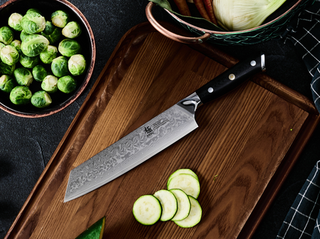
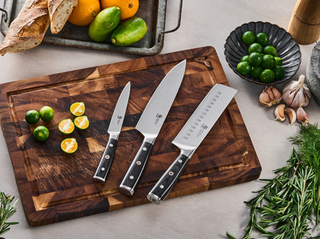
Use a long, sharp knife or a chef’s knife for best results. A blade like the 8" Gyuto chef knife VG10 made up of Damascus steel allows you to slice cleanly across the grain without tearing the fibers.
KYOKU knives are designed for precision slicing, featuring:
- Blades made of strong stainless steel
- Razor-sharp edges for clean cuts
- Handles that are comfortable for better control
A sharp knife can help you reduce tearing, keep slices neat, and preserve texture.
5. Cut At a Slight Angle (Optional, But Nice For Presentation)
Tilting your knife a bit can help in creating wider slices. They’re better looking and easier to chew. It is a technique very commonly used for fajitas, steak salads, and/or steak plates.
6. Choose the Correct Slice Thickness
Cutting the steak into thin pieces keeps it tender.
- Ideal thickness should be in the range of: ¼ to ½ inch
- Thinner slices are directly proportional to easier chewing
Just this one step alone can transform your results when learning how to cut flank steak against the grain.
Does the Same Go for Other Cuts?
Yes. The rules apply to most other meats:
- Skirt steak: Leaner with even more fiber than flank.
- Hanger steak: Rich flavor, but requires careful slicing
- Wild game: Highly essential because of its extra lean muscle
- Flat iron steak: Benefits greatly from cross-grain cuts
- Brisket: Always slice across the flat
Once you learn how to cut against the grain of flank steak, you’ll be looking at the grain on every cut of meat you make.

Final Verdict: A Small Step With a Big Impact
What matters more than salt rubs, marinades, or cooking methods is proper slicing against the grain. A well-sliced flank steak, when cooked, can taste like a premium cut, even without breaking the bank.
Make sure to take care of the following every time you cook the flank steak:
- Identify the direction of the fibers
- Position the meat in the right way
- Slice smoothly with a sharp blade
Combine this process with a high-quality blade like those from KYOKU, and your results are immediate. Learn how to cut flank steak against the grain, and even a tough piece will become juicy, tender, and full of flavor, every time.
Explore more on cutting prime rib into steak, and more knife recommendations from Kyoku.

