

To score bread with a knife, you need two important things: the right knife and the proper technique. When you score bread with a knife, especially artisan loaves like sourdough, your main goal is to control the way the bread expands during baking.
Proper scoring is crucial because the cuts have to act as release points for steam, ensuring that the loaf does not burst in the oven. A well-placed score allows the bread to open up beautifully, revealing that soft interior and creating an attractive crust pattern.
So, how can you achieve this with a knife?
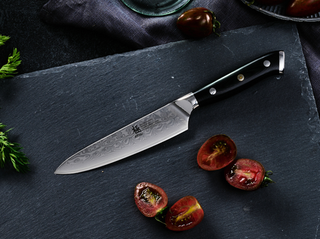
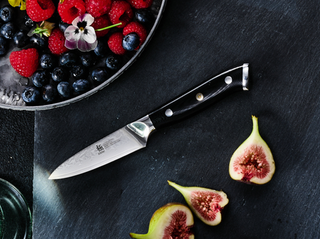
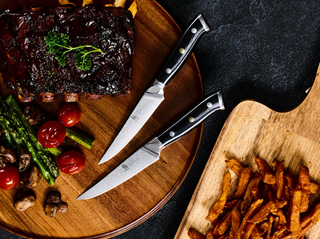
Start with a Pairing Knife: Best Knife for scoring bread
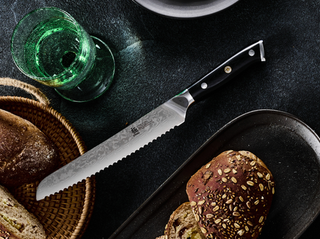
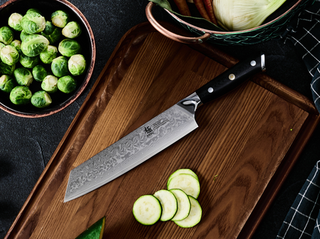
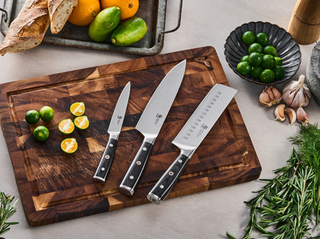
Generally speaking, a bread lame is ideal for scoring bread. But if you are using a knife, the closest you can come to a bread lame is a bread knife. A bread knife works because it has a straight edge that makes cleaner cuts than a serrated knife, and its smaller size makes it easier to control for quick, decisive slashes.
For scoring bread, you need a bread knife with the following features:
- A sharp blade that slices cleanly instead of dragging or tearing dough
- A thin blade for creating clean, low-resistance cuts
- A short blade length (3–4 inches). A shorter blade gives better control and accuracy
- A straight edge for clean scoring lines. Serrated knives tend to tear rather than slice
Once equipped with the proper pairing knife, all that is left is strategy.

How to Score bread with a knife
1. Prepare Your Dough
Begin by preparing your dough as usual and allow it to proof until it has nearly doubled in size. Timing is key here: if you score too early, the dough may not have developed enough tension, and if you wait too long, the surface could become too dry.
A lightly floured surface on your dough helps prevent sticking, but be cautious not to add too much extra flour.
2. Hold Your Knife Properly
Next, hold your knife with confidence yet with delicacy. A steady hand contributes to neat scores, and the skill comes with practice. Remember, there is no need for deep cuts; a modest incision of about 1/4 inch is typically enough.
Hold the knife at a slight angle (usually around 30 to 45 degrees) to the dough surface. This angle allows for a gradual cut that rises away from the dough.
3. Score Swiftly, Making Shallow Cuts
Using one swift motion, make your score. Whether you opt for a single long slash or more decorative patterns, consistency is very important.
If you are experimenting with patterns, remember that the score should not be too deep. Deep cuts might result in undesirable openings while baking.
4. Experiment with Different Angles
The process might require a few trials to perfect your technique. It is often helpful to experiment with different angles and depths to see what works best for your particular dough. As you continue practicing, you will develop an instinct for how deep or shallow your cuts should be for each type of bread.
Practice makes perfect, and over time, you will notice incremental improvements. Besides the technical aspects, scoring bread is also a creative outlet. Each loaf can tell a story through its unique patterns, and refining your technique adds a personal touch to your baking.
 Tips for scoring sourdough bread with a knife
Scoring sourdough bread may seem a bit more challenging because of its unique characteristics. Sourdough typically has more surface tension and a sticky skin due to its natural fermentation. However, a few practical tips can make the process easier and more enjoyable.
1. Make Sure the Bread is Properly Fermented
First, it is very important to ensure that your sourdough is properly fermented. Well-developed sourdough should exhibit a slight resistance when scored. If the dough feels too relaxed, consider giving it a little more time in the final proofing stage. The resulting tension in the dough is essential for a good score.
2. Use Proper Scoring Technique
Secondly, as with any scoring technique, using a very sharp knife is key. A dull blade might tug at the dough rather than making a clean incision, potentially deflating the sourdough structure. Many bakers prefer to use a bread lame, but a quality knife from Kyoku can serve the same purpose when sharpened adequately.
3. Ensure the Bread is Not Sticky
Gently dusting the cutter or the dough with a little flour before scoring can reduce the risk of the dough sticking to your knife. However, you should not overdo the flouring; too much can alter the dough’s texture and inhibit a clean score.
4. Warm the Knife Before Scoring
Another helpful tip is to warm the knife before use. Run it under warm water and then dry it completely with a towel. A warm knife can sometimes help in making smoother, cleaner cuts, especially when the dough is cold from proofing. This minor trick has been touted by many experienced bakers as a secret to obtaining neat scores.
5. Think of Your Designs
While traditional, straightforward lines are common, nothing is stopping you from experimenting with different patterns, provided they are not overly complex. Some bakers like to incorporate crosshatch patterns or simple slashes. The key is to maintain consistency with each cut so that the dough expands uniformly.
With these practical suggestions, scoring sourdough can become a less intimidating task and more of an enjoyable part of your baking process. Each score is a chance to fine-tune your technique and experiment with your personal style.

Final Thoughts on Scoring Bread
From defining your objectives to selecting the right tool and mastering the technique, every step contributes to the final loaf's quality. Whether you are working with standard bread dough or the more complex sourdough, these guidelines are designed to help you achieve professional-looking results at home.
By incorporating these principles, you ensure that your bread not only rises beautifully but also presents a striking, artisanal appearance. You might also be interested in the best knives for cutting sourdough bread.

