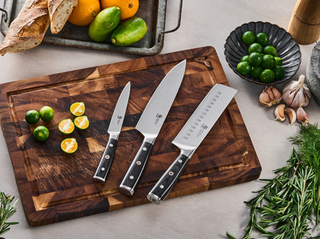

The decision on whether to buy a kiritsuke vs a gyuto knife may be overwhelming, considering the two are the legendary knives in the Japanese food culture. This comparison is important since the correct knife will instantly enhance efficiency, accuracy, and comfort in the kitchen.
As I explored these knives side by side, the distinctions became clear; each blade has its personality, advantages, and uses. This knowledge will assist any person, whether at home or in the business profession, in making the right decision.
What Is a Kiritsuke Knife?
The Kiritsuke knife is one of the most admirable knives in Japanese cuisine: it is so special that only the head chef in most professional kitchens carries it. Its unique form and steep learning curve have seen it being elegant and highly specialized.

Kiritsuke Knives: Shape and Design
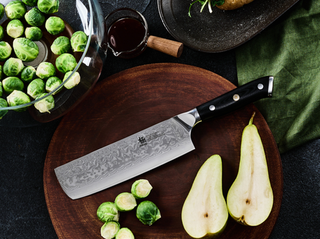
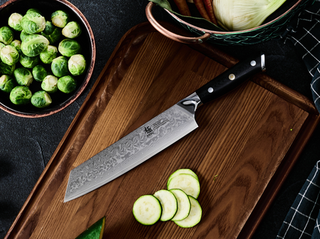
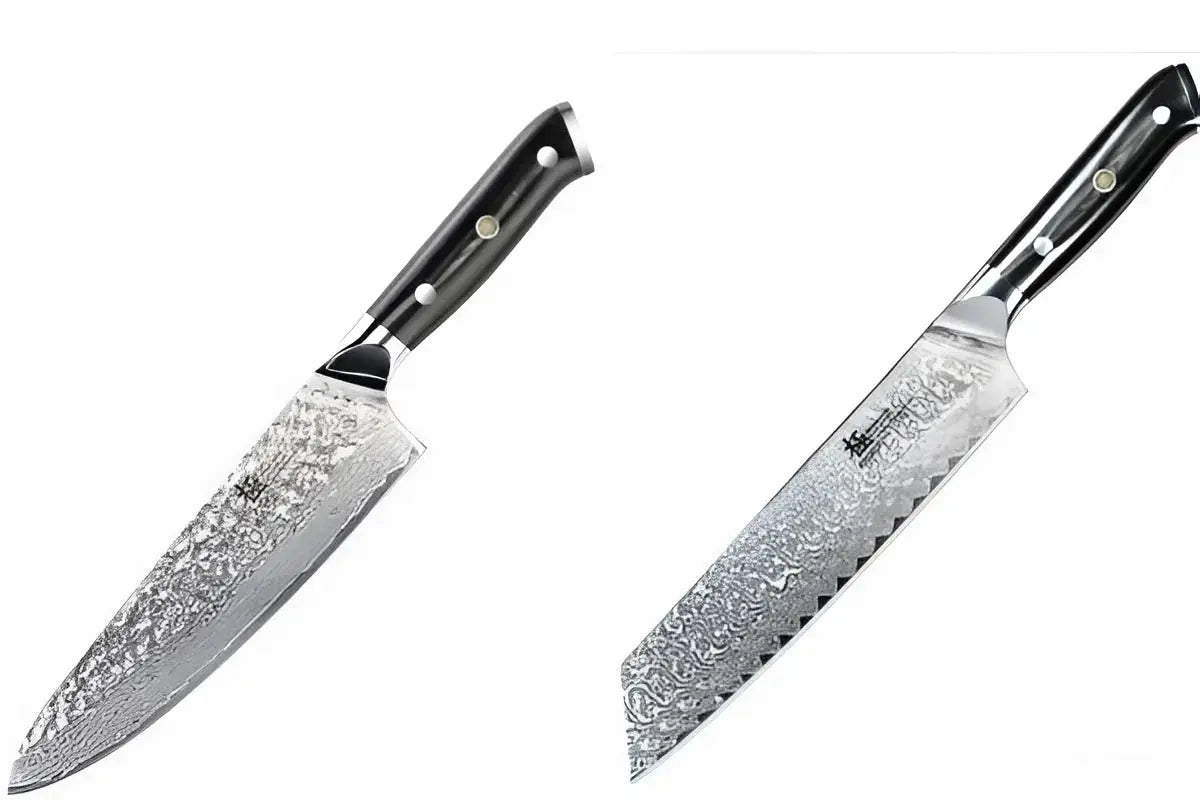
The profile of a kiritsuke blade is long, flat, and has a typical angled tip, or so-called reverse tanto or K-tip. It is sharpened geometrically and therefore aggressive to deliver a straight cut.
A large number of higher-quality kiritsuke knives are made of Damascus steel. The 8.5" Kiritsuke Knife from the Shogun Series is made of a 67-layered Damascus steel.
The good quality steel of this knife not only protects the blade but also forms the beautiful herringbone patterns or waving interiors to embody the traditional craftsmanship.
Uses Best Uses of a Kiritsuke Knife
Kiritsuke is created to be used in two main modes: slicing and push-cutting. Its low, flat profile isn’t suitable for up-and-down curved cuts, which makes it ideal for:
- Clean slicing of fish and proteins
- Paper-thin vegetable cuts
- Decorative vegetable carving
- Long, straight push cuts
- Precision tip work
Due to its control and sharpness, the chefs tend to use it in higher-level presentation work. This is exactly the answer to the question of what a kiritsuke knife is used for.

Who is Kiritsuke Knife For?
A kiritsuke is best for anyone aiming for top-quality slicing, as opposed to versatility. Consider a kiritsuke knife if you:
- A professional/skilled cook at home?
- Like using the push-cutting technique.
- Interested in a classic, high-precision Japanese blade.
- Value slicing precision more than versatility.
What Is a Gyuto Knife?
A Gyuto knife is a Japanese form of a Western chef knife, only that it is sharp, lighter, and more responsive. The gyuto is versatile and easy to use, unlike the kiritsuke.
 Gyuto Knives: Shape and Design
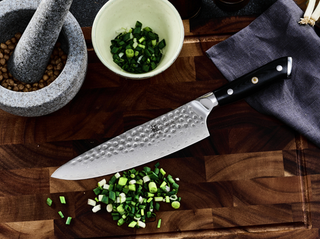
The gyuto is curved in a gentle manner that facilitates rocking movements, and it has a sharp tip that allows multi-purpose cutting. The knife has a thinner blade than Western chef knives, which reduces drag and enhances speed.
Most good gyuto knives these days are with finely defined designs, such as wave patterns and other aesthetically pleasing designs. Kyoku’s 8" Gyuto Chef Knife is crafted of VG10 Damascus Steel and a hammer-beaten wave pattern. This knife is good at edge preservation and balance, so it can be used in any fast kitchen work.
Gyuto Knives: Best Uses
When asking what a gyuto knife is used for, the answer is simple: almost everything. It is built for versatility and excels in everyday, general-purpose tasks.
A Gyuto knife excels in: chopping vegetables, slicing meats, rock chopping herbs, dicing an onion, and cutting fish. It is a strong tool, and that is why it should be present in any home and professional kitchen.
Gyuto Knives: A gyuto is ideal for beginners and professionals, as well as:
- Cooks who want a single, all-purpose knife
- Anyone who prefers rocking or hybrid cutting knife techniques
- Busy kitchens where speed and versatility matter
The gyuto would never be left out of my shortlist in case I need to pick only one knife to use for daily cooking.
Gyuto vs Santoku Knives: Differences and Uses
| Feature | Kiritsuke Knife | Gyuto Knife |
| Blade Shape | Flat profile, angled K-tip | Curved profile, pointed tip |
| Best For | Slicing, push cutting, precision | General-purpose chopping and slicing |
| Skill Level | Intermediate to advanced | Beginner to professional |
| Cutting Style | Push cuts | Rocking, chopping, slicing |
| Versatility | Moderate | Very high |
| Traditional Status | Often used by head chefs | Common in all kitchens |
| Examples | Kyoku Shogun and Gin Series Kiritsuke | Kyoku Shogun and Samurai Series Gyuto |
Gyuto vs Kiritsuke: Which Knife Should You Choose?
Choosing between a kiritsuke and a gyuto ultimately depends on cooking style and confidence with knife techniques.
Choose a Kiritsuke If:
- You like straight and sharp slicing.
- You appreciate Japanese traditional knives.
- You favor the use of push-cutting.
- You desire a knife that will take the presentation cut to another level.
- You love statement knives that are ceremonial in design.
A kiritsuke is an excellent slicer of proteins, garnish, and veggie ribbon, or an artistic preparation.
Choose a Gyuto If:
- You desire an all-purpose everyday knife.
- You either rock, chop, or multidimensionally cut.
- You are either a beginner or intermediate cook.
- You desire one knife, and it can be used to do nearly everything.
- You need speed, comfort, and familiarity
Gyuto is a combination of strength and delicacy, so it is the most convenient to use in the majority of kitchens.

Final Thoughts on Kiritsuke vs Gyuto Knives
It is not about which knife is superior, but the kiritsuke vs gyuto argument is all about the knife that fits your culinary lifestyle. The two blades mirror centuries of Japanese craftsmanship, which provides accuracy, beauty, and durability. Buy an artistic sharpness of kiritsuke or simply the convenience of a gyuto, but purchasing a good quality blade will change your entire cooking experience.
And when the finest workmanship, durability, and performance are desired, whether it is the Damascus-layered Shogun Series or the ultra-hygienic Gin Series, visit Kyoku to find the finest.
Get a new kitchen set of Kyoku and taste the difference in every cut.

