
While it is true that cutting technique and experience matter a lot when cutting sushi, one undeniable fact is that the knife you use plays a huge role in how your final pieces look, feel, and even taste.
So, if you are a beginner, understanding why the knife matters and which knives are best for cutting sushi will save you a lot of frustration and help you build good habits from the start.

Best Knives for Cutting Sushi
Opinions tend to vary on which exactly is the best knife for cutting sushi, but most people agree that yanagiba knives, sujihiki knives, and Gyuto ( Japanese chef knives) are at the top of that list.
1. Yanagiba Knives: The Classic Choice for Pros
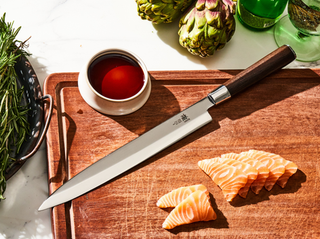
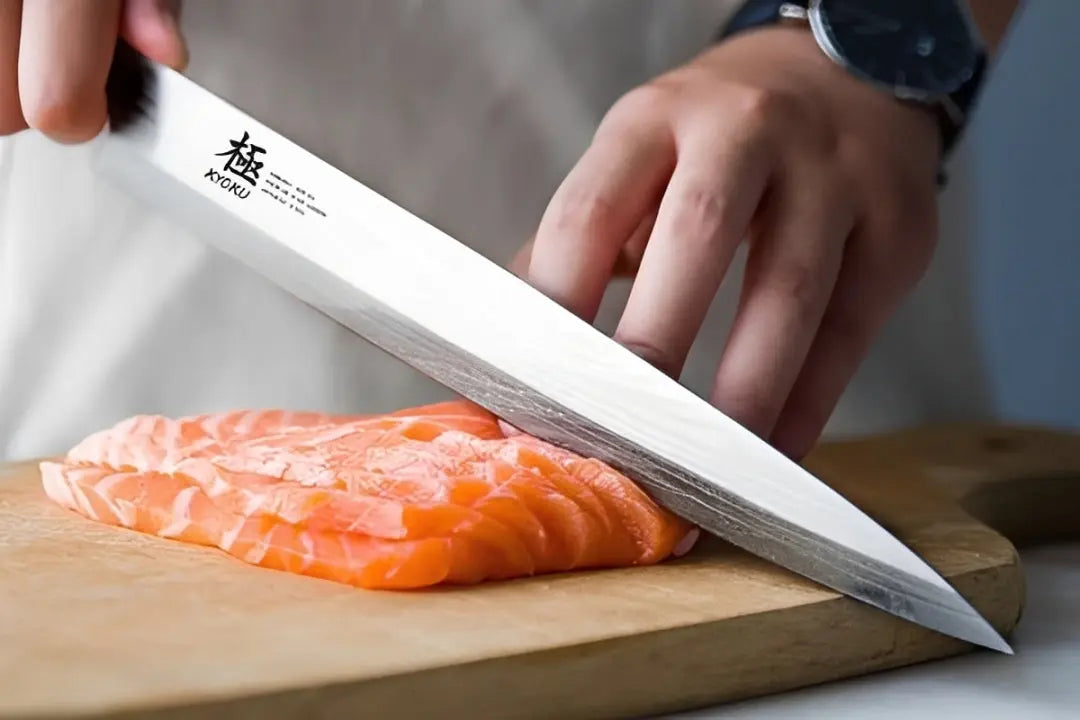
The Japanese Yanagiba knife is the classic sushi knife, and the one most people picture when they think of professional sushi chefs. The reason the yanagiba excels when it comes to cutting sushi is mostly because of its length and structure:
- It has a long, narrow blade with a single bevel (sharpened on one side).
- The length allows you to slice through a piece of fish in one smooth, uninterrupted motion.
In this way, using a yanagiba knife allows you to preserve the texture and create a clean, glossy surface on the fish, making for perfect sushi cuts.

Why the Yanagiba Knife is Considered the Best for Slicing Sushi
- The long blade allows clean, single-stroke cuts
- The edge is typically extremely sharp, allowing for efficient cutting
- It has a thin profile that reduces drag and tearing
Moreover, the yanagiba is purpose-built for sashimi and nigiri, and that makes it a gold standard in traditional sushi kitchens.
2. Sujihiki Knives
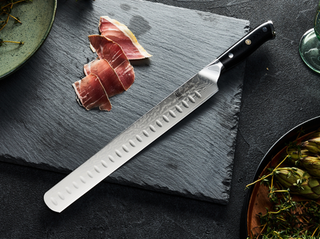
The sujihiki is similar in shape to the yanagiba but has a double bevel (sharpened on both sides), and to many cooks who are more familiar with western knives, it is considered to be the best for cutting sushi.
Just like the yanagiba, a sujihiki knife still allows for long, clean slicing motions, but the key advantage it offers is that it is more familiar to cooks who’ve used Western knives.
Why Sujihiki Knives Work for Slicing Sushi
- It also features a long, slim blade for smooth slices
- The double bevel makes it easier to handle
- It is more forgiving for chefs who are not familiar with the traditional sushi cutting techniques
In fact, the sujihiki is often seen as a bridge between Western and Japanese knife styles, which explains why it is more comfortable for Western-inclined chefs.
3. Gyuto Knives
The Gyuto knife is the Japanese equivalent of a chef’s knife, though it is not specialized solely for sushi; the fact that it is incredibly versatile makes it a favorite sushi knife for most people.
With a sharp, thin blade and a comfortable, versatile design, a Gyuto knife generally performs very well for slicing fish and can handle prep work like trimming, portioning, and even cutting rolls.

Gyuto knives are excellent for slicing fish, vegetables, and proteins, and if you want a sushi knife that can do much more than cutting sushi, a gyuto is precisely what you need.
4. Santoku Knives
While it may not be the first on most people’s list of best sushi knives, a santoku knife does a decent job of cutting sushi. It’s easy to control and works well for smaller cuts of fish and sushi rolls.
The santoku is shorter and wider than a gyuto and very popular with home cooks, and it works well for cutting sushi because:
- It is compact in size: easy to handle
- It has a flat edge that supports precise cuts
- Lightweight and approachable,
While not a traditional for sushi, it is a practical and user-friendly option that many people use.
Best Sushi Knives for Beginners
1. Gyuto (Best All-Around Choice)
For most beginners, the gyuto is the most appealing option when it comes to sushi knives. That’s mainly because it is familiar in shape to Western chefs’ knives, and you don't need to learn single-bevel technique. Besides, it is also a perfect “all-around” knife that is useful beyond sushi, making it a great value.
If you are a home cook who just wants clean and even sushi cuts (not anything professional), then a Gyuto probably should be the first choice. It is a safe, smart investment.
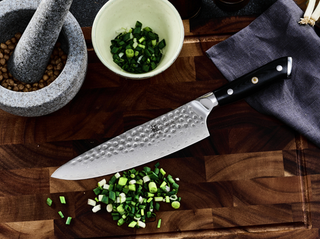
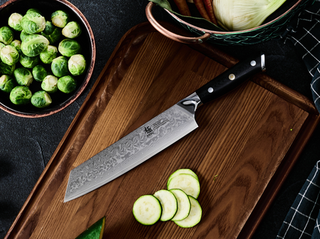
Consider this 8" Gyuto Chef Knife from Kyoku, which has a ruthlessly sharp edge handcrafted by seasoned artisans to a mirror polish at 8-12°. It is long enough, sharp for quick slicing, and its VG-10 Damascus steel outperforms AUS-10 steel in durability and is easier to sharpen, since cobalt enhances the other alloying elements.
Sujihiki (Best “Sushi-Focused” Beginner Knife)
If your main goal is slicing sushi cleanly but you’re not ready for traditional single-bevel knives, the sujihiki is a great choice.
Its long blade helps with smooth slicing, and the double bevel is easier to sharpen and control. It gives you many of the benefits of a sushi knife without the steep learning curve, and also…it is less intimidating than a yanagiba
Santoku (Best for Casual Home Sushi Makers)
If you’re only making sushi occasionally and want something simple, the santoku is very approachable and will do a great job. It is easy to maneuver, comfortable for smaller hands, and excellent for rolling and portioning. It’s not a specialist, but it’s friendly and forgiving.
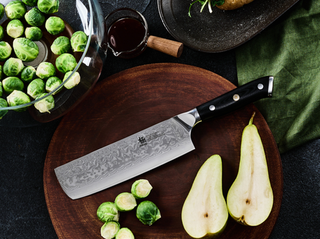
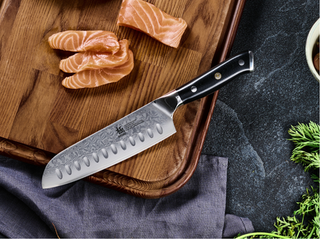
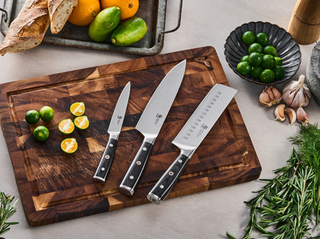
This 7" Santoku Knife from Kyoku features a 66-layer Damascus VG10 stainless steel blade that extends to the entire length of the handle, withstanding punishing daily use without sacrificing precision and control. With a blade sharpness of 8–12°, and an overall length of 12 in. (31 cm), it is sharp for cutting sushi, light and easy to maneuver for beginners, and will serve you in the long term.
Why the Knife Matters When Cutting Sushi
Many people argue that when it comes to cutting sushi, the most important thing is technique. But, in truth, the knife (and more precisely, how sharp it is) matters just as much as the cutting technique.
Thats because raw fish is delicate, and the goal is to slice it cleanly, without tearing the flesh, bruising it, or squeezing out moisture. Even if your technique is perfect, using a poor knife choice will almost inevitably lead to ragged cuts, uneven pieces, and fish that look dull or feel mushy.

For beginners, the knife you use is especially important. When you’re still learning proper slicing technique, a well-suited knife compensates for small mistakes. A sharp knife of the right length will glide through the fish instead of forcing you to saw back and forth, which helps you develop better control and confidence.
Important Factors That Matter in a Sushi Knife
- Sharpness: Sharpness is non-negotiable for a sushi knife. A sharp knife slices cleanly, and clean cuts preserve texture, appearance, and flavor.
- Blade length: A sushi knife must have a long blade. Sushi slicing is about smooth, single motions.
- Blade thinness: Thin blades reduce resistance and drag. This prevents tearing and helps maintain the fish’s natural structure.
- Balance and control: A well-balanced knife gives you better control, which is critical when working with soft, raw fish.
- Steel quality: High-quality steel holds an edge longer and sharpens more cleanly. This is especially important for sushi, where edge performance is everything.
Tips for Using and Maintaining a Sushi Knife
- Always use a gentle, single slicing motion, let the knife do the work
- Wipe the blade between cuts to keep slices clean and glossy
- Use a wooden or rubber cutting board to protect the edge
- Hand-wash and dry immediately after use
- Store the knife safely, ideally in a sheath or knife block
Regular honing and occasional sharpening will keep your knife performing at its best. Buy a whetsone, and learn how to use it.

Final Thoughts on Sushi Knives
The best knife for sushi may depend on what your intentions are and where you are in your journey. Traditional knives like the yanagiba are incredible tools, but they shine most in experienced hands. For beginners, versatility, control, and ease of use matter more than strict tradition.
Start with a knife that makes you feel confident and comfortable. Stay encouraged: as your skills grow, your appreciation for specialized sushi knives will grow too. With the right knife and a little practice, you’ll be slicing sushi like a pro sooner than you think.
Discover some tips on how to cut sushi fillings the right way.

