
For most people, the best length for a paring knife is about 3 to 3.5 inches (roughly 80mm to 90mm) long. This is generally considered to be the "sweet spot" for an all-around home kitchen paring knife: it is short enough for nimble, detailed work but long enough to easily segment citrus fruit or slice small items on a board.
However, the ideal length for a paring knife depends heavily on who is using it and how they intend to use it. While 3 to 3.5 inches works for most people, there are many others who prefer shorter paring knives (2 to 3 inches) or longer paring knife blades (4+ inches) for different kinds of cutting tasks.
A good approach is always to understand the different common paring knife lengths, what they are best for, and which best matches your primary use.

Paring Knife Blade Lengths Explained
Paring knives come in different blade lengths, and they can generally be grouped into:
- Short paring knives: 2 to 3 inches (50mm – 75mm))
- Standard paring knives: 3.25 to 3.5 Inches (80mm - 90mm)
- Long paring knives: 4+ Inches (100mm+)
Generally speaking, short paring knives are for people with smaller hands, cooks who prioritize precision, and those doing intricate prep work. Professional pastry cooks and garnish-focused chefs often prefer shorter blades for decorative tasks.
1. Short Paring Knives: 2 to 3 inches
Pairing knives with 2-inch to 3-inch blades are generally classified as short paring knives, and they are best for intricate, precise “in-the-hand tasks” (i.e, do not involve the cutting board). Usually these include:
- Coring vegetables
- Pulling out potato eyes
- Scoring decorative patterns
- Precision peeling.
The main advantage of a short paring knife is that the short blade keeps your thumb closer to the tip, which gives you an enhanced level of control that you will not have with a longer blade.

2. Standard Length Paring Knives (3 Inches)
Many people consider 3.25 to 3.5 inches to be the perfect length for a paring knife, mainly because of how versatile it is for general, all-purpose use. A 3.25 to 3.5-inch paring knife provides enough length to slice small fruits on a board (like limes or garlic) while remaining short and nimble enough to comfortably peel an apple in mid-air.
For many home cooks and beginners, the classic 3.5-inch paring knife remains the sweet spot because it works well for a wide variety of kitchen tasks without feeling too specialized.
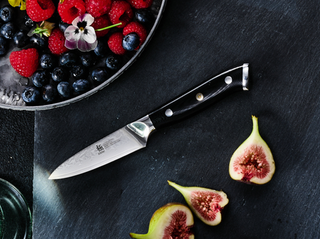
Kyoku's 3.5" Damascus paring knife is a huge favorite for many home cooks looking for a sharp, lightweight, well-designed paring knife. It weighs merely 4 oz. and has a high-quality 67-layered stainless steel blade that has been cryogenically treated for heat resistance. This fruit paring knife is ideal for mincing herbs, slicing fruit, peeling vegetables, cutting cheese, etc.
3. Long Paring Knives: 4 inches
4-inch paring knives are too long for many people, and most home cooks find them a little unwieldy for hand-peeling. However, 4-inch knives are specifically preferred by people with long hands or those who prefer board work because the extra length compensates for handle clearance without losing nimbleness.
They are also preferred by experienced cooks who sometimes want a hybrid between a paring knife and a utility knife.
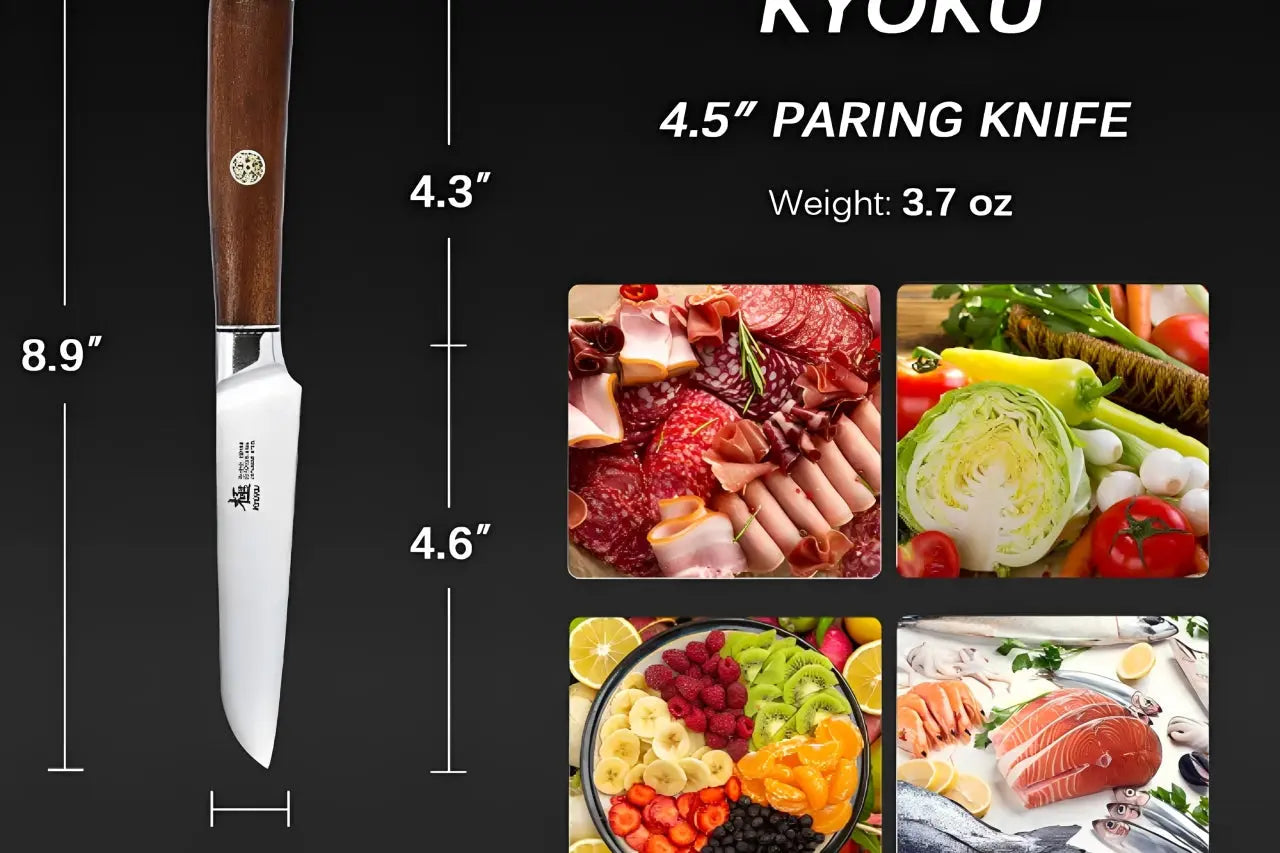
The 4.5" Daimyo Series Paring Knife from Kyoku is one of the longest Japanese paring knives home cooks actually use. It has a scalpel-like 13-15 degree edge that allows it to slice with minimal resistance, making it perfect for peeling, mincing, coring fruit and vegetables, deveining shrimp, and more with meticulous precision. It is also a very solid knife, made of 440C with 59-60 Rockwell hardness. It is corrosion-resistant, and the edge retention is simply exceptional.
A Note on 5-inch Paring Knives
If your goal is hand peeling, a 5-inch paring knife is not typically the best option. In fact, 5-to-6-inch paring knife blades are generally classified as utility or Japanese "petty" knives. Utility knives are designed primarily for minor cutting board tasks, line prep, or slicing small sandwiches—not for detailed hand work.
Paring Knife Lengths Compared
| Blade Length | Main Advantage | Best For | Ideal Tasks | Potential Downsides | Recommended Kyoku Model |
| 2 -3 inches | Maximum precision and control | Small hands, detail-focused cooks | Peeling, garnishes, shrimp, strawberries | Limited versatility and reach | Not Available |
| 3 to 3.5 | Best balance of control and versatility | Most home cooks | Every day prep, trimming, peeling, and slicing small produce | Slightly less specialized | Gin Series 5" Paring Knife |
| 4 inches | More reach and versatility | Larger hands, experienced cooks | Fruit slicing, sandwich prep, utility tasks | Less nimble for intricate work | Daimyo Series 4.5" Paring Knife 440C Steel |
Tips for Choosing the Right Paring Knife Blade Length
The best paring knife length is the one that feels natural in your hand and matches the type of prep work you do most often. Here are some important tips for buying the right paring knife:
1. Choose Based on Your Most Common Tasks
Start by considering how you actually use a paring knife. If, like most people, you mostly do general prep work, then go for the standard 3-inch paring knife. However, if you mainly peel fruit, hull strawberries, or do detail work, a shorter blade may feel best.
2. Consider Your Hand Size
The size of your hand determines how comfortable a knife will feel during use. People with larger hands may find very short blades cramped or limiting, but that is not usually the case for most people.
- If you have larger hands, a 3.5-to-4-inch blade gives your fingers more clearance
- If you have smaller hands, a 2.5-to-3-inch blade will feel much more agile and less intimidating.
The smaller your hand, the shorter, lighter, and more maneuverable the blade should be.
3. Think About Your Other Kitchen Knives
If you already own a utility knife, petty knife, or small prep knife, you may prefer a smaller paring knife focused purely on precision. If your paring knife needs to cover multiple roles, a longer blade may make more sense.
4. Try Different Lengths If Possible
Knife preferences are highly personal. Some cooks instantly love compact blades, while others prefer the versatility of longer knives. Even experienced cooks often disagree on their ideal paring knife size.
5. Finally, Don't Overspend
Of all the different kitchen knives you have, you are most likely to lose the paring knife. They frequently hit hard pits, get tossed into sinks, or easily go missing in trash piles. So, rather than spending hundreds of dollars on a premium boutique model, go for an affordable, reliable model from an affordable brand.
All Kyoku paring knives are under $50, and are currently on sale. You can get a 25% discount on a dependable, solid paring knife that will serve your kitchen for years. With our lifetime warranty, you don't have to fret about losing it or having any problems with it.

Final Thoughts on Paring Knife Lengths
There is no universally perfect length for a paring knife. It all depends on your cooking style, hand size, comfort preferences, and the tasks you perform most often.
However, there are general preferences. For most people, a 3-inch paring knife offers the best all-around balance of precision and versatility. It handles everyday prep tasks comfortably while still maintaining excellent control.
Shorter blades under 3 inches are ideal for highly detailed work and maximum maneuverability, while longer 4-inch blades provide extra reach and versatility for larger prep tasks.
Explore the best uses of a paring knife: what it can do and what it cannot do.

