
When cutting flank steak for fajitas, your objective is to create strips that are tender and easy to chew, easy to pick up with a fork or tortilla, uniform in size, and able to hold their juices and flavor.
Flank steak naturally has long, dense muscle fibers. Those fibers cannot remain long after slicing, else the meat will feel chewy and tough. That's why they need to be properly cut with the right kitchen knife: you want to shorten those fibers and make each bite significantly more tender.
In other words, the goal is not simply to create strips of beef; it is to create strips that maximize tenderness while still being the right shape and size for fajitas.

How to Cut Flank Steak for Fajitas: Step-by-Step
Step 1: Let it Rest
After cooking, allow the flank steak to rest for about 5 to 10 minutes before cutting. This resting time is important because it gives the juices time to redistribute throughout the meat.
If you slice immediately after cooking, many of those juices will run onto the cutting board instead of remaining in the steak. If you want juicier, more flavorful fajita meat, you have to let it rest before slicing.
Step 2: Identify the Grain
Before making any cuts, locate the direction of the muscle fibers. Look closely at the meat and find the long parallel lines of muscle fibers running down the steak. These lines of muscle are known as the grain, and they are easy to see because they run in one consistent direction across the cut.
The grain determines the direction in which you will slice. If you do not identify it first, you may accidentally cut the steak incorrectly and end up with tougher fajitas.
Step 3: Position the Steak Correctly
Place the steak on the cutting board so the grain runs left-to-right or right-to-left in front of you. This positioning will make it easier to cut across the fibers rather than along them. It also helps you maintain consistent slices and reduces the chances of accidentally following the grain.

Step 4: Cut into Sections
Start by cutting the large slab with the grain into 2 or 3 smaller blocks (about 3 inches wide). Cutting into smaller blocks makes it a lot easier to continue slicing, and it also ensures that the final fajita strips will be the perfect bite-sized length when you eventually cut them.
Step 5: Angle Your Knife Slightly
Even though you already have the steak well positioned, do not cut straight down. Hold your knife at a 45-degree angle. This is known as a bias cut in cooking, and it creates wider, restaurant-style strips while keeping the fibers short and tender.
An angled cut increases the surface area of each slice, giving the fajita meat a more attractive appearance and a better texture. Many restaurants use this technique because it creates the classic fajita-style strips people expect.
Step 6: Slice Against the Grain
Make thin strips across the grain of the meat. Most fajita strips are about ¼ inch thick, although personal preference varies.
Cutting across the muscle fibers shortens them dramatically. This is the single most important factor in making flank steak tender.

Step 7: Keep the Slices Uniform
Try to keep each strip relatively consistent in width and thickness. Aim for a thickness of 1/8 to 1/4 inch. Uniform slices look more appealing, heat evenly, fit tortillas better, and provide a more consistent eating experience
Once finished, you should have a pile of tender, juicy strips ready for tortillas, peppers, onions, and your favorite toppings.
Cutting Flank Steak for Fajitas vs. Other Uses
Not every flank steak recipe requires the same cutting approach. For fajitas, the goal is to create long, thin strips that fit naturally inside tortillas.
Fajitas are unique because the meat is expected to remain in distinct strips. Those strips need to hold together, stay tender, fit tortillas comfortably, and pair visually with peppers and onions. That is why the classic long-strip slicing technique works so well for fajitas.
1. Cutting Flank Steak For Tacos
Flank Steak for Tacos, for example, is often cut into shorter pieces. Depending on the style of taco, the steak may be thinly sliced, diced, or chopped after slicing. The emphasis is usually on creating bite-sized pieces rather than long strips.

2. Cutting Flank Steak For Salad
Flank Steak for Salads is sliced very thinly and sometimes at a sharper angle. Here, the goal is maximum tenderness and easy fork-cutting rather than maintaining longer strips.
For sandwiches, slices are frequently wider and slightly thinner. That's because the objective is creating pieces that layer neatly on bread rather than fitting inside tortillas.
3 Best Knives for Cutting Flank Steak For Fajitas
For slicing flank steak perfectly for fajitas, long, straight-edged, laser-thin blades are the standard choice. A razor-sharp straight edge glides cleanly through them to maximize tenderness. A serrated knife is out of the question because it will shred the coarse muscle fibers of a flank steak.
1. Carving/Slicing Knives
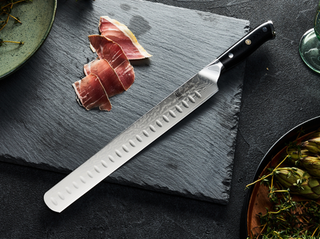
A dedicated slicing knife allows you to cut through the entire width of the flank steak in a single fluid pull motion. This prevents sawing, which creates ragged edges. Look for a carving knife with granton edges (dimples on the side of the blade). These pockets create air cushions that stop thin, sticky strips of beef from clinging to the metal.
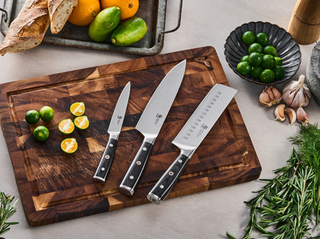
Kyoku's Daimyo 12" Slicing Knife is expertly forged from Japanese 440C stainless steel to deliver exceptional durability and performance in all slicing tasks. Its razor-sharp 13-15° blade effortlessly creates uniform flank steak strips while the innovative dimpled design reduces friction and prevents food from sticking.
Currently at 47% off, and it comes complete with a protective sheath and backed by Kyoku's lifetime warranty.
2. Standard Chef's Knives / Gyutos (The Multi-Tool)
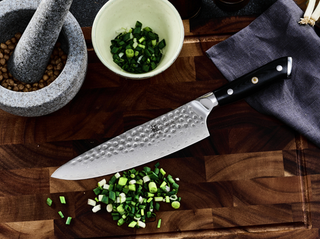
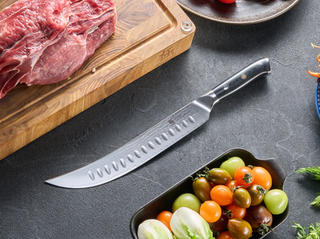
If you do not want to purchase a single-use specialty blade, a standard 8-to-10-inch chef's knife or a Japanese Gyuto is completely sufficient. Ensure the steel profile is relatively thin. A thick, heavy German bolster can wedge and crush lean fibers instead of cleanly parting them.
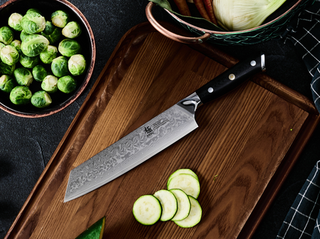
The 8" Japanese chef knife, or "gyuto knife", from Kyoku is the essential must-have in any kitchen. It effortlessly chops meat, fish, vegetables, and more like a charm. The hammer-beaten wave pattern on the base of the tang showcases the stunning craftsmanship and its luxurious identity.
Why The Knife Matters When Cutting Flank Steak For Fajitas
Many people focus entirely on cooking the steak and overlook the knife used to slice it. A good knife can make a surprisingly large difference.
-
You get cleaner cuts: A sharp knife glides through the meat rather than tearing it. This helps preserve the texture and appearance of each slice.
-
Juice retention is much better: Clean cuts damage fewer muscle fibers. As a result, more juices remain inside the meat.
-
Consistency is much better: A sharp knife makes it easier to maintain even slice thickness throughout the steak.
Tips for Cutting Flank Steak for Fajitas
-
Always trim excess fat first: Large pieces of surface fat can make slicing more difficult and may create uneven strips.
-
Slice while it's still warm: The steak should be rested but still warm. Warm steak is generally easier to slice cleanly than fully chilled steak.
-
Use a large cutting board: A spacious cutting surface gives you room to maintain long, smooth slicing motions.
-
Keep your knife sharp: A dull knife compresses and tears the meat instead of slicing cleanly through it.
-
Don't make the strips too thick: Thicker slices leave longer muscle fibers intact and can reduce tenderness.
-
Watch the grain carefully: The grain can occasionally change direction slightly across the steak. Take a moment to verify its direction before continuing to slice.

Final Thoughts on Cutting Flank Steak For Fajitas
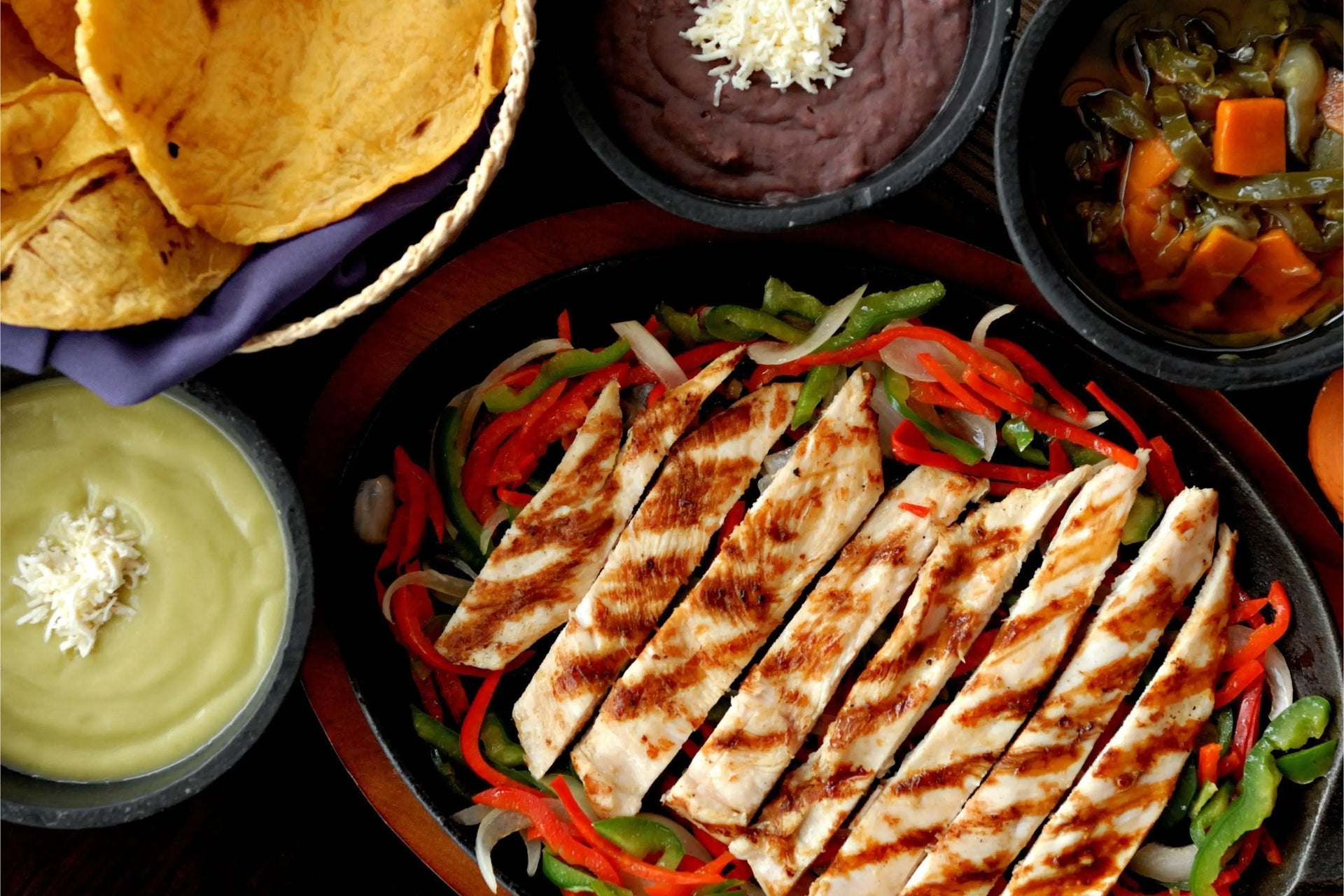
Perfectly cut flank steak for fajitas should consist of thin, uniform strips sliced against the grain. The pieces should be tender, juicy, and easy to bite through while still maintaining enough length to create the classic fajita presentation.
When done correctly, each strip will showcase the rich flavor of flank steak without the chewiness that sometimes gives this cut a bad reputation. Combined with grilled peppers, onions, and warm tortillas, properly sliced flank steak delivers exactly what great fajitas are supposed to be: flavorful, tender, and easy to enjoy in every bite.
Explore how to cut flank steak against the grain perfectly every time.

