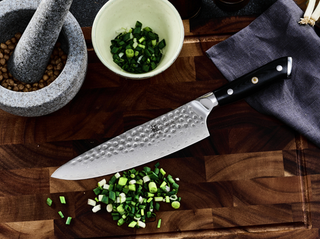
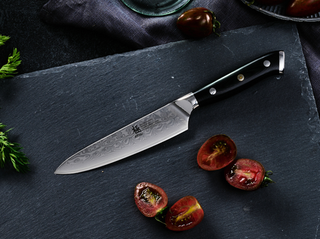
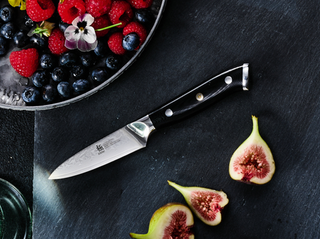
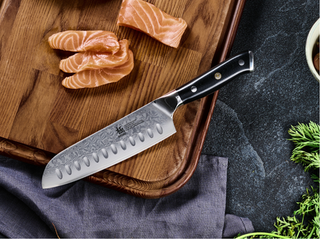
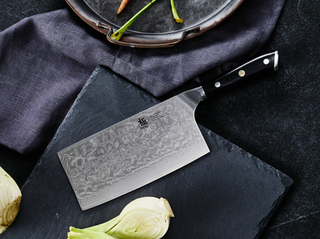
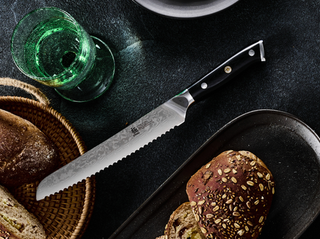
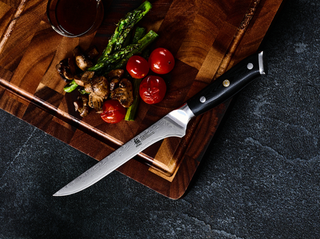
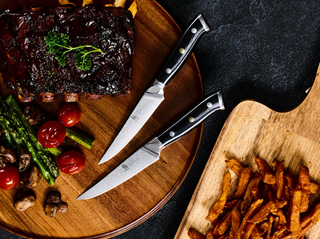
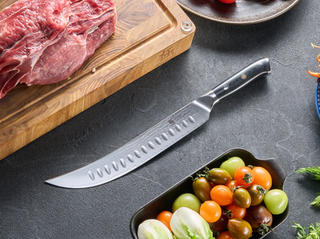
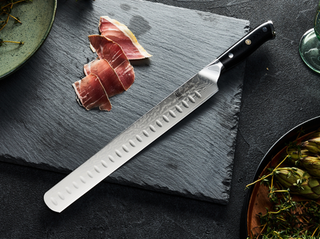
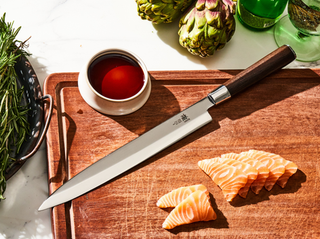
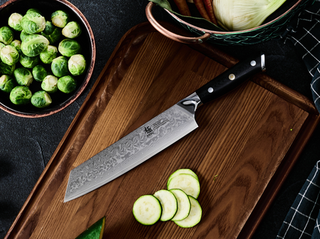
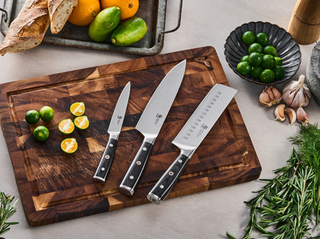


Both utility knives and pairing knives are designed for more control and finesse than a large blade can provide, which makes them excellent options when you want a smaller, sharper, and more precise alternative to a chef’s knife.
However, while they may look somewhat similar at first glance, they serve different purposes in the kitchen. If you have to choose between them, the way is to look at their main strengths and the tasks they handle best.

Top 5 Uses of Utility Knives
A utility knife typically has a blade between 4 and 7 inches, placing it right between a chef’s knife and a paring knife. This size makes it extremely versatile for slicing, cutting, trimming, and even some general kitchen tasks.
Here are the top situations where a utility knife shines.
1. Slicing Sandwich Ingredients
Utility knives are great for slicing ingredients like tomatoes, cucumbers, deli meats, and cheese because the longer blade gives you more cutting surface, allowing you to slice these ingredients smoothly in a single motion.
In comparison, a paring knife is usually too short to make long, clean slices. With a utility knife, you can maintain better control while still covering more surface area.
2. Cutting Medium-Sized Fruits and Vegetables
Utility knives are excellent for foods like apples, zucchini, peppers, and small squash. The blade length provides enough leverage and reach to cut through slightly larger foods without switching to a full chef’s knife.
Why is it better than a paring knife?
Paring knives are designed for detail work. When you try to cut medium-sized produce with them, the process becomes slower and less efficient.

3. Trimming Meat or Poultry
Utility knives can also handle tasks such as trimming fat, slicing chicken breast, and cutting small portions of meat. The blade is long enough to make smooth slicing motions while still being nimble enough for control.
A paring knife has a shorter blade, which means meat trimming can be awkward and less precise.
4. General Kitchen Tasks
Because it strikes a perfect balance between precision and cutting power, many home cooks use utility knives as a go-to, everyday knife for tasks that don’t require a full chef’s knife. Usually, this includes tasks like slicing bagels, cutting sandwiches, and chopping small ingredients.
Top 5 Uses of Paring Knives
A paring knife is usually 3–4 inches long and is designed specifically for precision tasks that require detailed control. From peeling fruits and vegetables to garnish preparation, here are the tasks where paring knives excel.
1. Peeling Fruits and Vegetables
Paring knives are perfect for peeling a variety of fruits and vegetables, including apples, potatoes, carrots, and even pears.
Whereas a utility knife may be longer and control when peeling delicate produce, the shorter blade of a pairing knife allows you to hold the food in your hand and carefully guide the blade along the surface.

2. Detailed Cutting and Precision Work
The compact blade of a pairing knife gives you excellent control and accuracy, making it perfect for tasks that require detail and precision. This includes:
- removing strawberry stems
- trimming blemishes from fruit
- scoring small items
The smaller blade allows you to make precise cuts without overcutting or damaging the food.
3. Deveining Shrimp
A paring knife is commonly used to remove the vein from shrimp. The pointed tip allows you to make small, controlled incisions. Utility knives, on the other hand, are larger and are usually less suited to this type of delicate work.
4. Garnish Preparation
The smaller blade of a pairing knife also allows for more artistic, controlled cutting. This explains why paring knives are also perfect for creating garnishes such as citrus twists, vegetable flowers, and decorative cuts.
Main Differences Between Utility and Paring Knives
| Feature | Utility Knife | Paring Knife |
| Blade Length | 4–7 inches | 3–4 inches |
| Main Purpose | Versatile slicing and general prep | Precision and detailed cutting |
| Best For | Medium-sized ingredients | Small fruits and vegetables |
| Control | Moderate control | Maximum control |
| Cutting Power | Greater than a paring knife | Lower but more precise |
| Typical Use Style | Cutting on a board | Often used in-hand |
When to Choose a Utility Knife Over a Paring Knife
1. When You Need More Cutting Reach
If you’re slicing ingredients like tomatoes, cucumbers, or sandwiches, a longer blade is extremely helpful.
The added blade length allows you to complete cuts smoothly without sawing.
Look for a utility knife with a 5–6 inch blade, a thin, sharp edge, and a comfortable handle balance
2. When You Want an Everyday Knife
Some people prefer using a utility knife for many daily tasks instead of switching between multiple knives. It offers a great middle ground between precision and versatility.
Look for a lightweight, well-balanced utility knife with a sharp, durable blade that works best.
3. When Cutting Medium-Sized Foods
For foods that are too big for a paring knife but too small to justify a chef’s knife, a utility knife is perfect. It provides more cutting power without sacrificing control.

When to Choose a Paring Knife Over a Utility Knife
1. When Peeling Fruits or Vegetables
Peeling is one of the most common uses of a paring knife. The short blade allows you to maneuver around curves easily. Look for a pairing knife with a 3–4 inch blade, a sharp, pointed tip, and a lightweight design
2. When Doing Precision Work
If you need to make delicate cuts or remove small imperfections, a paring knife gives you maximum control. Its compact blade allows extremely precise cutting.
3. When Working With Small Ingredients
Foods like garlic, strawberries, or small peppers are easier to handle with a smaller blade. A paring knife gives you the ability to work close to the food without unnecessary blade length.
Look for a thin, razor-sharp blade that is ideal for precision tasks.
Final Thoughts on Utility vs Paring Knives
Both utility knives and paring knives are incredibly useful in the kitchen, especially when you want a smaller and more precise alternative to a chef’s knife. Utility knives are better suited for slicing and general prep work, while paring knives excel at delicate tasks like peeling and detailed cutting.
Rather than thinking of them as competitors, many cooks find that the best setup includes both knives. Each fills a different role, and together they provide the precision and versatility needed to handle a wide range of kitchen tasks efficiently.

