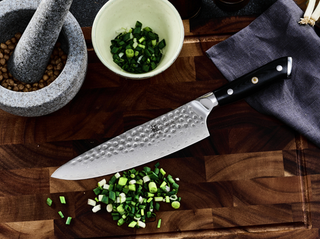
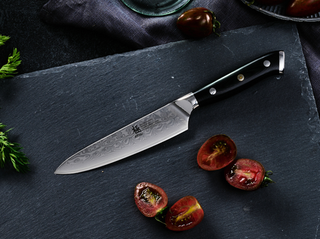
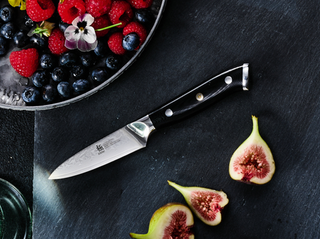
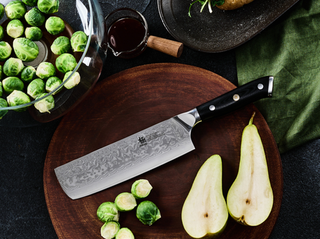
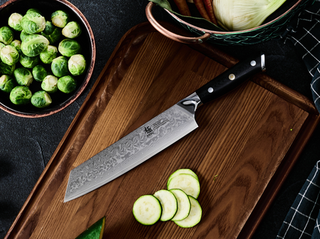
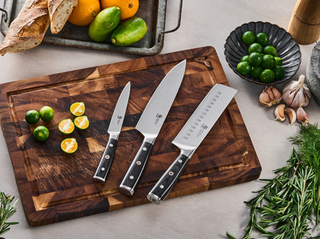


If you’re new to chef knives and trying to choose one for your home kitchen, understanding the differences between a 6-inch and an 8-inch blade is more important than you probably realize.
In the kitchen, two inches can completely change how a knife feels, how it handles, and what it’s best suited for.
This is why the 2-inch difference between a 6-inch and an 8-inch chef knife is crucial, even if it doesn’t seem like a big deal.
The right size can make prep work smoother and more enjoyable. The wrong size can feel awkward, tiring, or even unsafe.

6-Inch Chef Knives: Key Features and Best Uses
A 6-inch chef knife is the more compact version of the classic chef’s knife design, which keeps the same curved blade shape but in a shorter, lighter format.
Though many people dismiss it, a 6-inch chef knife is especially good for precision tasks where control matters more than blade length, and can provide certain benefits, especially if you have really small hands or less demanding kitchen tasks.
Key Advantages of a 6-Inch Chef Knife
1. It is Easier to Control
The shorter 6-inch blade is easier to maneuver and control, especially if you are a beginner.
Because the blade is shorter, it tends to feel less intimidating and easier to guide precisely. If you’re still developing knife skills, that added control matters and can boost your confidence because there is less risk of overcutting.
2. It is Lighter and Less Fatiguing, Especially after Long Use
A 6-inch knife typically weighs less than its 8-inch counterpart, which makes it easier on the wrist and comfortable for people with smaller hands.
If you are a home cook who is not frequently prepping large volumes of food, the smaller and lighter 6-inch knife can be more sustainable: you get less tired during quick prep tasks
3. It is More Ideal For a Small Kitchen
A 6-inch knife is a more manageable and practical choice for a smaller kitchen. For a tiny home kitchen, for example, where the cutting board is small, counter space is limited, and the kitchen area is compact, a 6-inch chef knife allows you to handle many tasks a larger model would, while minimizing space.
Again, a 6-inch chef knife can be great for precision tasks where control matters. Consider one for tasks like chopping herbs, slicing garlic, and shallots, etc.

8-Inch Chef Knives: Key Features and Best Uses
8 inches is generally considered the “standard” size for a chef's knife in most professional kitchens, and many culinary schools and chefs prefer this size. The main appeal of an 8-inch chef knife is its versatility for different cut sizes and strokes.
However, an 8-inch chef knife, especially when compared to a 6-inch chef knife, is better in tasks that involve a rocking motion, and for larger ingredients.
Unique Advantages of an 8-Inch Chef Knife
1. It is Incredibly Versatile
With an 8-inch chef knife, you can cut through bigger items in a single motion instead of sawing back and forth. The longer 8-inch blade allows for larger cuts, longer slicing strokes, and more efficient prep.
2. It's Bigger Size Allows Efficient Rocking Motion
Chef knives are generally designed for a rocking motion, and the longer blade of an 8-inch knife makes it more efficient in many ways:
- It provides a smoother rocking arc
- It speeds up chopping
- And handles bulk prep more efficiently
If you cook often, this will very likely matter a lot.
3. It is Better for Larger Ingredients
An 8-inch chef knife handles large onions, cabbage, melons, and big cuts of meat with no problem. The extra blade length gives you room to work without constantly repositioning, which is what you would have to deal with when using a 6-inch chef knife for such tasks.
6-Inch vs 8-inch Chef Knives: Best Uses Compared
| 6-Inch Chef Knife | 8-inch Chef Knife |
| Chopping herbs, slicing garlic, and shallots | Slicing large vegetables |
| Cutting small fruits and vegetables | Breaking down chicken |
| Trimming meat | Dicing multiple onions quickly |
| Quick weeknight prep | Cutting watermelon or squash |
| Batch meal prep |
In short, a 6-inch chef knife can be great for precision tasks where control matters, and an 8-inch chef knife shines when volume and efficiency matter.
6-Inch vs 8-Inch Chef Knives: Key Differences
| Feature | 6-Inch Chef Knife | 8-Inch Chef Knife |
| Blade Length | Shorter, compact | Longer, standard size |
| Weight | Lighter | Slightly heavier |
| Control | High control, beginner-friendly | Slightly less nimble but stable |
| Efficiency | Good for small prep | Excellent for bulk prep |
| Rocking Motion | Limited arc | Smoother and more effective |
| Best For | Small kitchens, light tasks | Frequent cooking, larger ingredients |
| Hand Size Fit | Ideal for smaller hands | Comfortable for most users |
Choosing Between a 6-Inch and 8-Inch Chef Knife
Choose a 6-Inch Chef Knife If:
- You’re new to cooking
- You have smaller hands
- You cook in a small kitchen
- You mainly prep smaller ingredients
- You value control over speed
It is approachable, less intimidating, and very capable for everyday meals.
Choose an 8-Inch Chef Knife If:
- You cook frequently
- You prep large amounts of food
- You want one do-it-all knife
- You work with large vegetables and meats
- You prefer a traditional chef knife feel
For many home cooks, the 8-inch is the most versatile long-term investment.
Affordable 8-Inch Japanese Chef Knives From Kyoku
Kyoku's collection of Japanese-chef knives, known as Gyuto knives, contains some of the top-quality 8-inch models you can get for your home without breaking the bank.
The top two models, the Shogun 8" Gyuto Chef Knife and the Samurai 8" Gyuto Chef Knife, are both made of VG1O Damascus steel and designed with unique but different traditional Japanese patterns.
1. The Shogun Series 8-Inch Gyuto Chef Knife
The Shogun Series 8" Gyuto Chef Knife is made from high-quality 67-layered stainless Damascus steel, with a hammer-beaten wave pattern on the base of the tang that showcases the stunning craftsmanship and its luxurious identity.
The ruthlessly sharp edge is handcrafted by seasoned artisans to a mirror polish at 8-12° double-sided using the traditional 3-step Honbazuke method, and it is best for slicing effortlessly and chopping meat, fish, vegetables, and more.
2. The Gin Seris 8" Gyuto Chef Knife
The Gin 8" Gyuto Chef Knife is also made with ultra-premium 67-layered stainless Damascus steel at HRC 58-60 hardness, with Japanese Damascus steel patterns and designs.
It features an innovative ionic silver coating for antibacterial protection and is designed to be the ultimate all-purpose knife for effortless slicing of meats, vegetables, and fruits. The blade is also cryogenically treated with the 3-step Honbazuke method. It
For more options, consider this guide on reviewing Kyoku's best 8-inch knives to find which one better suits your specific tastes.

Final Thoughts
Two inches might not sound like much, but in the kitchen, it changes how a knife feels, performs, and fits your cooking style. A 6-inch chef knife offers control, comfort, and ease of use, and an 8-inch chef knife offers power, versatility, and efficiency.
If you cook occasionally and prefer something lighter and easier to handle, the 6-inch is a great choice. If you cook often and want a single knife that can handle almost everything, the 8-inch is hard to beat.
Compare Gyuto vs Kiritsuke knives for more options as you find the best knife for your kitchen!

